Tag: bible (page 8 of 9)

Family Devotionals

To me, family devotions are kind of cheesy.

I mean, I like the concept of sitting down as a family and talking through the truths of the Bible together.  But when it comes to sitting down and actually doing it, in my head it just comes off being silly.  I keep imagining a family all cozy in their den, with the children in the pajamas, sitting around a fire.  Dad gets out his guitar, and they sing a song together.  The children are gleaming as mom and dad, in their footed pajamas, talk about how God changed their soul…at breakfast that morning.

Weird, no?

This Christmas season, though, I’ve found a new resource I’m going to try.  And I won’t be wearing any footed pajamas when I read it.

Because I really want my son to understand the beauty of the Christmas season.  Why we give gifts.  Why we decorate our house.  Why we visit family.

Because in all of the hustle and bustle of getting ready, it’s incredibly easy to forget to instill in my son the values that are driving our generosity.  I want to raise a son that understands our traditions, and celebrates them with as much life and vigor as we do.  And not just because he’s excited about getting gifts from a fat man whose belly jiggles.

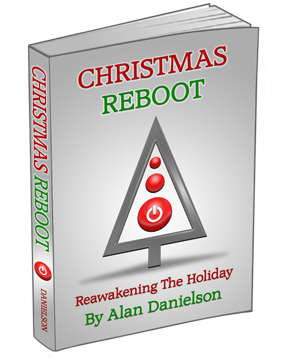
Here’s the new ebook, called Christmas Reboot, written by a good friend of mine, Alan Danielson.  You should pick up a copy.  It’s only $8.

My family and I are going to be working through this throughout the holidays.  I’ll let you know how it goes.  I’m pretty stoked about it.

Will you join us?


The problem with Bible stories for children

The problem with many Bible stories that we share with children on Sundays is that they’re not really for children.

I mean, the ones we share on Sundays are for children…but the ones found in Scripture aren’t.  These are stories for adults.  And if you made a movie out of them, they’d probably be rated R.

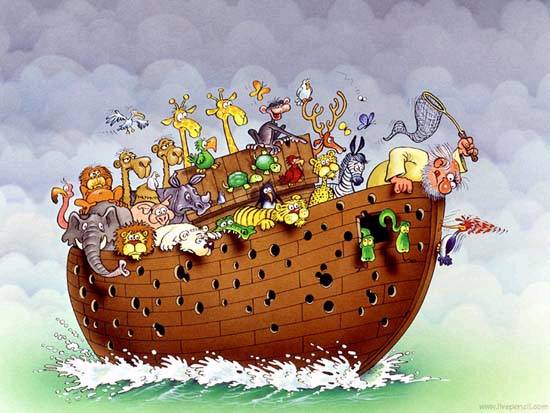
Take, for example, Noah and the flood.  We like to share it with children because it has animals in it.  And animals are cute.  And kids like boats.  But you know what really happened?

God killed the entire human race.

We also like to share the story of Moses, and the parting of the Red Sea.  Pretty cool thinking about Pharaoh charging after Moses and the Israelites, Moses stretching his staff out, the waters parting, and the Israelites walking across on dry ground.  Until we realize that thousands upon thousands of Egyptians died that day in the Red Sea.  “Ok, kids…color that picture!”

Speaking of Moses, it sounds like a good idea to make a movie (or two or three) about the events leading up to the 10 commandments, right?  Pretty cool to see the magicians trying to perform the plagues that Moses uses his staff to accomplish.  Cute, no?  Try ending your bedtime story with your children with, “And then all of the firstborn children died…”  “Goodnight, my firstborn son…sleep tight!”

And it’s not that we shouldn’t tell our children the stories of the Bible.  It’s just that we often rip out the parts that make the story what it is.  I’m not all for sharing the gory details of these stories with my 2 year old.  But the problem comes in when we as adults forget that there’s more to these stories.

Instead of engaging and true stories, we can easily equate them with the realm of Harry Potter and Lord of the Rings.  Great, well-told stories, but ultimately no more than a fantasy novel for children.  And if we use that logic with Noah and Moses, what’s to stop us from using the same logic with the rest of Scripture?  The adventures of Paul and the early church seem pretty far-fetched…speaking in tongues, healing people, the church growing by thousands when Peter and John would preach.  The resurrection of Jesus?  Fairy tale stuff.  Jesus coming back to Earth to claim His Church?  Nah…

I’m not against telling children the stories of the Bible.  But I am against crafting a god that is safe, tame, half-hearted, and weak.

Let’s not let The Children’s Bible lull us, as adults, into sleep, thinking the Bible is full of fairy tales for children.  The Bible is an intellectually robust, compelling story of God’s relentless pursuit of you.

Not just a fantasy novel.


The problem with kittens

Kittens are cute, right?  I mean…who can resist a kitten?

They sneak, they pounce, they purr…and they’re just so cute and cuddly.

But there’s one glaring problem with kittens…they’re going to soon become cats.

Though it’s a longer discussion for another day, I could make a great theological argument why cats didn’t appear on the scene until after the Fall of man in Genesis 3 (j/k).  And for the record, cats are never mentioned in the Bible (not j/k).  Ever.

Why do I not like cats?

1. You don’t own a cat. A cat owns you.  Which is a problem.

2. They don’t come when you call.

3. One day they love you, and the next day they act like they don’t know you.

4. Claws. I’ve been scratched by many cats.  And it was in those moments that I wish I had claws so I could scratch those cats back.

5. Teeth. I’ve been bitten by a cat.  Not the best day of my life.

6. I’m allergic to cats. I realize that this final reason is specific to me, but it’s enough of a deal for me to include.

I can put up with a kitten.  All of the problems with cats above are small when the adult cat is just a kitten.

And the same thing could be said about our sin.  Our sin, when it first starts, is rather manageable.  Under control.  Not all that damaging.  “Acceptable” by you, and others.

But the problem is that, just like kittens, you can’t stop its growth.  It’s inevitable that a kitten will grow into a cat.

A little bit of pride grows into hate.

A second glance at a girl becomes a life-altering struggle with lust.

A “little” lie matures into a difficulty with telling the full truth.

A tiny anger problem grows into an uncontrollable temper.

A little unthankfulness grows into greed.

When you notice sin in your life, take care of it before it has the chance to grow.

But each one is tempted when, by his own evil desire, he is dragged away and enticed. Then, after desire has conceived, it gives birth to sin; and sin, when it is full-grown, gives birth to death. – James 1:14-15


The Battle

The battle against sin is a tough one, isn’t it?  The more and more we fight against it, the more and more it seems to keep creeping up on us.

And if you try to say you don’t really have any sin you’re dealing with, you’re fooling yourself.  (See 1 John 1:8)

John Owen, a Puritan, in his book The Mortification of Sin, says,

“Indwelling sin always abides while we are in this world; therefore it is always to be mortified.”

Why is this fight against sin so tough?  Because we’ve got flesh and bones…and a Spirit.  And they don’t like each other.  (see what I mean HERE)

The Apostle Paul understood that, and explained the battle well HERE.

Our battle with sin is a battle to the death.  That besetting sin that keeps following you won’t give up until one of you dies.  It’s relentless.  It doesn’t take a day off.  And the moment you take a day off, it’s ready to strike.  Owen again rightly points out:

“Sin will not only be striving, acting, rebelling, troubling, disquieting; but, if let alone, if not continually mortified, will bring forth great, cursed scandalous, soul-destroying sins.”

If you’re serious about fighting against sin, why not do some real battling?  Bring someone into your story.  Confess your sins to someone other than God.

Setup boundaries.  Understand your triggers.  Know your weaknesses.  But don’t try to go at this alone.

Eternity is worth it.  And that’s what’s at stake.

I’ve been listening to Mumford & Sons a lot lately.  Check out this video below…seems they’ve done some real battling against their addictions.  I’ve posted some of the lyrics below it.

May you find a new resolve to fight against your sin.

The Cave

So make your siren’s call
And sing all you want
I will not hear what you have to say

Cause I need freedom now
And I need to know how
To live my life as it’s meant to be

And I will hold on hope
And I won’t let you choke
On the noose around your neck

And I’ll find strength in pain
And I will change my ways
I’ll know my name as it’s called again


Quit waiting

Farmers who wait for perfect weather never plant.

If they watch every cloud, they never harvest. (Ecclesiastes 11:4)

Change is difficult, no matter who or what you’re trying to change.  We humans quickly habitualize (yep, I just made that word up), meaning that even changing things that aren’t “old and stuffy” is a big task.

Don’t find yourself noticing what needs to change, but paralyzed while you’re waiting for the “perfect” climate.  Or the “perfect” new small group leader.  Or having just the right amount of time.  Or having enough resources.  Or…well…the “perfect” anything.

And the moment you find the “perfect” situation, be ready…a storm is likely on its heels.

If you’re waiting for everything to line up perfectly, change will never happen.

Where things don’t line up “perfectly,” creativity, collaboration, and hard work more than make up the difference.

Leaders know what changes need to happen.  And they go ahead and “plant.”  Because if you never plant, you’ll never harvest.

What changes need to happen in your church?  In your small group?  In your life?


Snake Handling

I’m currently reading Salvation on Sand Mountain: Snake Handling and Redemption in Southern Appalachia by Dennis Covington.

Before you’re too quick to write off snake handling, read this passage in Mark:

He [Jesus] said to them, “Go into all the world and preach the good news to all creation. Whoever believes and is baptized will be saved, but whoever does not believe will be condemned. And these signs will accompany those who believe: In my name they will drive out demons; they will speak in new tongues; they will pick up snakes with their hands; and when they drink deadly poison, it will not hurt them at all; they will place their hands on sick people, and they will get well.” (Mark 16:15-18)

What are your thoughts on snake handling?  Is it really an expression of a closeness with the Holy Spirit, an unwavering commitment to the Great Commission, and a sign of the presence of Christ in a person’s life?

The way you answer that question says a lot about your hermeneutic.

Leave a comment below and I’ll send you a free, highly poisonous rattlesnake.


The Best Bible app

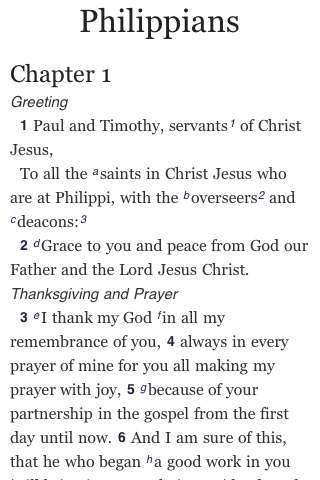
More and more, Bible apps are dominating the landscape of churches and small groups over physical Bibles.  At least in the circles that I run.  And you’re welcome, as a church or small group, to fight against that.  Maybe it’s a battle worth waging.  For me…I’m happy that people are interacting with the Scriptures, whether it’s on tablets carved from stone or on a mobile device they carry with them all of the time.

I’ve been using my computer and phone to read and search the Scriptures for some time now, and thought I’d highlight for you the two options I believe are the strongest.

YouVersion (developed by Life Church in Oklahoma) has quickly become the industry standard for Bible apps.  It’s interactivity, combined with the depth of translations and resources available, leave nobody questioning why over 350,000 people subscribe to one of their reading plans.  The unofficial poll that I conducted via Twitter was overwhelmingly dominated by YouVersion.

YouVersion (desktop HERE, mobile app HERE)

  • 41 different translations in 22 languages
  • Free
  • Sync with desktop client
  • Multiple reading plans (I’m currently using the Chronological Plan)
  • Share verses easily via Twitter and Facebook
  • Post notes for others to view (desktop client only)
  • Audio Bible (desktop client only)
  • Interact with Live Events (when using YouVersion Live, and when the event you’re attending has posted notes)
  • Share verses easily via Twitter and Facebook

____________________________________________________________________________________________

I’ve used Crossway’s (publishers of the English Standard Version Bible) app for less time, and though it only contains one translation, I have found great value in it.

ESV Bible (iPhone app HERE)

* Available whether you’re connected online or not
* Free
* Quickly and easily find a specific passage/verse
* Record personal notes/highlights and save for future use
* Share verses easily via Facebook and Twitter

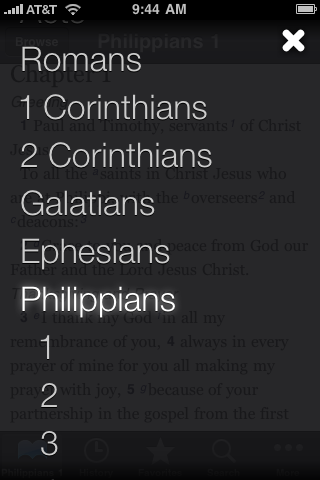
What Crossway’s app lacks in power (as compared to YouVersion), it easily makes up for with its ease of use and beauty. It’s incredibly simple to jump to various passages, and the user interface improves readability (as compared with YouVersion and other apps). The font and style of the app matches the font and style of the ESV Bible (my translation of choice), so when I’m reading this app on my phone, I almost forget that I’m looking at an electronic device.

________________________________________________________________________________________________

When I’m in small group, or just needing to look up a specific verse, I use the Crossway app. When I’m reading through the Bible on my own (daily), I use a combination of the desktop and mobile versions of YouVersion.

Do you use a Bible app?  Or do you think it’s better to use a physical copy of the Bible?


A truly “deep” study

I posted this question last week on my blog:

What does it take for a “regular” Bible study to turn into a “deep” Bible study?  What goes into making small group time a “deep” Bible study?

You can see all of the great comments I received HERE.

Instead of jumping straight into the methodological (how-to), it’s appropriate to look at the theological/philosophical (why?) definitions of what I believe is a “deep” discussion in a small group.  Starting with the theology behind the methodology helps to give a framework so that groups know why they are doing what they are doing…and why change is (or might be) necessary.  If we were to jump straight to the “here’s how to lead a deep discussion” topic, we’d be undercutting the foundation.

When we go about defining what a “deep” study is, we find it’s pretty simple.

A truly “deep” study is one that helps us to take steps of faith.  A “shallow” one does not.

And what does it look like to take a step of faith?

1. Start following Christ. As Jesus went on from there, he saw a man named Matthew sitting at the tax collector’s booth. “Follow me,” he told him, and Matthew got up and followed him. (Matthew 9:9)

2. Understand what it means to follow. Hearing that Jesus had silenced the Sadducees, the Pharisees got together. One of them, an expert in the law, tested him with this question:  “Teacher, which is the greatest commandment in the Law?” Jesus replied: ” ‘Love the Lord your God with all your heart and with all your soul and with all your mind.’ This is the first and greatest commandment. And the second is like it: ‘Love your neighbor as yourself.’ All the Law and the Prophets hang on these two commandments.” (Matthew 22:34-40)

3. Repeat daily. Then he said to them all: “If anyone would come after me, he must deny himself and take up his cross daily and follow me. For whoever wants to save his life will lose it, but whoever loses his life for me will save it. (Luke 9:23-24)

4. Go. Then Jesus came to them and said, “All authority in heaven and on earth has been given to me. Therefore go and make disciples of all nations, baptizing them in the name of the Father and of the Son and of the Holy Spirit, 20and teaching them to obey everything I have commanded you. And surely I am with you always, to the very end of the age.” (Matthew 28:18-20)

I’m not negating the sovereignty of God to draw and grow people, nor am I doing away with personal responsibility, but if a small group discussion doesn’t help the group members to love God and their neighbor more (which Jesus defined as that which the Law and Prophets hang), then it’s not deep.  Period.

It doesn’t matter if we’re talking about a “seeker” small group, a college group, a preschool group, or a boating affinity group.  Discussions that don’t put feet to the Word and propel us to go are ultimately fruitless.

There will be much debate on how to flesh that out, depending on whether you operate with Sunday School classes, cell groups, home groups, community groups, or knitting groups.  And that’s okay.  I know that the way that each small group system fleshes the disciple-making process out will be a bit different. But here’s my admonition to us all: let’s not make the Christian life (and becoming a disciple) too difficult.  Jesus didn’t.  Love God.  Love your neighbor.  That’s difficult enough.

Depth is less about the transfer of information and more about life transformation.

I’ll continue this series of posts tomorrow, and talk about various aspects of studies that lend to the disciple-making process as described above.

What do you think?  Have your thoughts on “deep” studies been challenged?


Is God evil?

Is God evil?

Of course not.  Well…most would agree that He’s not.

But does God allow evil things to happen?

Take a peek into a conversation that Job had with his wife:

Then his wife said to him, “Do you still hold fast your integrity?  Curse God and die.”  But he said to her, “You speak as one of the foolish women would speak.  Shall we receive good from God, and shall we not receive evil?”  In all this, Job did not sin with his lips. (Job 2:9-10)

Did God cause this evil to happen to Job?  No.  The verses prior say

So Satan went out from the presence of the Lord and struck Job with loathsome sores… (Job 2:7-8)

We are quick to praise God for the good things that happen to us, and give Him credit for all of the blessings we receive.

But aren’t we also quick to shake our fists at God when things don’t go as we would like?  When we don’t get that promotion.  When we get sick.  When our children get sick.  When our marriage isn’t what we want it to be.  When all of our efforts fall flat.  When we strive with all of our might, yet get nowhere.

I don’t presume to know why God does what He does.

But this passage says that God allows evil things to happen.  And if you read through the first few chapters of the book of Job, you get some insight into how God worked, and how He allowed Satan to work on a short leash.  God didn’t cause evil.  But He allowed it with a purpose.

So if God allows evil to exist, does that make Him evil?  That’s a question you need to wrestle through yourself.  I’ve wrestled through it.  Last week, I was sick.  Not deathly sick.  But sick enough to stay home from work.  I felt rotten.  I had some sort of mild case of the flu, mixed with an ear infection, an eye infection, a sore throat, a sinuses that were trashed.  I also lost my voice.

And last week was one of the most important weeks for me in my job at Grace. I needed my voice.  And I needed to be at 100%.

So why would God allow me to be sick?  Here are a couple of reasons I came up with.  For purpose of generalization, I’ll call it “suffering.”  Some of you may laugh at this being called suffering, and honestly, I would, too, but suffering has varying ranges.  Bear with me.

A Non-exhaustive list of reasons God allows suffering

1. Suffering slows us down.  Our lives race on at such a fast pace that sometimes we just need to slow down.

2. Suffering causes us to think less of this life on earth and long for a better life.  When you’re going through suffering, life on earth isn’t as much fun.  We don’t value it as much as when everything is rosy.  We long for something better.

3. Suffering gives us time to reflect and evaluate.  What does your relationship with God look like when you’re falling apart physically?  Do you only praise God when everything is perfect?  Job was a great example of a man who praised God in the good times and in the bad. (Job 1:20-22)

4. Suffering puts the most important things in perspective.  When we are going through suffering, perishable things don’t matter as much.  We tend to devalue those things that are temporary.

5. Suffering allows us to be comforted by others.  If you never suffer, you can never receive the blessing of being encouraged and comforted by others.

6. Suffering reminds us we’re not in control.  When everything is going our way, we can slide into the thought process that we’re really controlling our future.  Suffering brings us back to the reality that we really have very little control.

7. Suffering allows us to be healed.  God is the ultimate healer, and we would never get to see that aspect of God, and receive that great blessing, if it weren’t for suffering.

8. Suffering, and recovering, helps us to comfort those whom we will come in contact with who suffer similarly.  Although suffering tends to make us quite self-centered, I believe one of it’s main purposes is so that, after God (and others) comforts us, we can extend that same love and care to others. (2 Corinthians 1:3-7)

9. Suffering gives us the chance to see who our real friends are.  Job had some pretty rotten friends (Job 4-25, 32).  Those who truly love us will stick by in good times and in bad.  And ultimately they want what’s best for us.

10. …

What would you add?
 

I’m not a reader…

Why can a person read 2,444 pages of the Twilight Saga but barely find 10 minutes to read their Bible?

I ask difficult questions.  Not difficult in that you couldn’t follow along because they’re intellectually difficult, but difficult in the sense that they’re not surface-level, “easy” questions.

I was talking with a person recently, asking them about how they’re doing spending time reading their Bible (because I’m convinced that if a person’s not reading their Bible consistently, they’re not growing consistently).

Them: I’m just not a reader.

Me: I don’t buy that.

Them: I just don’t like to read.

Me: How many pages are in Twilight?

Them: I don’t know…probably over 1,000.

Me: How long did it take you to read that?

Them: Less than a week.

Me: …

You make time for what matters most to you.  Not sure where to start with the Bible?  Here’s a reading plan for you.

 
Older posts Newer posts

© 2026

Theme by Anders NorenUp ↑