Archive - Church RSS Feed

My top 3 books for 2011

image credit: Creation Swap user Jamie Current

I’ve read a lot in 2011. And there are three books that rose to the top for me.

1. How to Win Friends and Influence People, by Dale Carnegie

This is an old book, but it’s still unbelievably applicable today. Because relationships are still vital to whatever you do, whether that’s at work, home, or church. This book oozes practical wisdom.

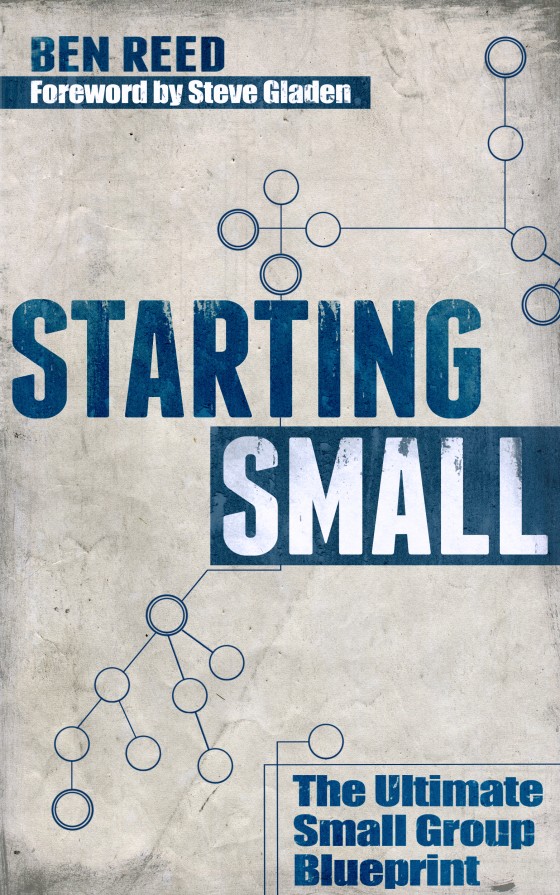
2. Small Groups with Purpose: How to Create Healthy Communities, by Steve Gladen (blog)

I know, it’s niche. But it’s good. If you’re overseeing small groups, this book is gold for you. Steve has laid out the method that Saddleback Church has pioneered in launching thousands of small groups. And he’s broken it down where churches who are much smaller can learn from the principles that Saddleback has used.

3. Sticky Teams, by Larry Osborne

Our staff read through this book together and it was so, so good. Osborne packs this book full of the wisdom he’s learned in leading his teams of staff members at North Coast Church. If you’re a team leader, or plan on being one, especially in the church, this is a must-read.

Question:

Have you read a must-read this year?


 * image credit: Creation Swap user Jamie Current


15 Christmas Ideas for your Small Group

image credit: creation swap user Matt Gruber

Lots of small groups take the Christmas season off. And that’s fine.

But if you’re one of the groups that really loves Jesus, you’re not taking the season off. You’re soldiering through like the little drummer boy who could. Massive traveling, family celebrating, and time off of work won’t slow you and your group down!

If you’re one of the groups that’s meeting throughout the month of December, you may be wondering what you can do that’s a little outside of the norm. I’ve got some suggestions.

15 Christmas Ideas for your Small Group

Fellowship:

Don’t feel bad about wanting to have fun together as a group this Christmas season. Having fun together is very biblical.

  •  Go caroling.
  • White elephant gift exchange. See explanation HERE.
  • Ornament exchange.
  • Pot luck with your favorite Christmas dish.
  • “Favorite book” exchange.
  • Celebrate with a gift exchange mid-January. That way, you can get gifts on sale, and extend the celebration of the birth of Jesus. Jesus would probably have loved a good sale. Am I right?!?

 Serving

  • Email your pastor for families in need, and serve them food and gifts.
  • Contact your local public school system and tell them you’d like to sponsor ___ families with food and gifts this Christmas. Ask them to connect you with the families.
  • Contact your local Salvation Army and sign up to ring the bell.
  • Write letters to soldiers who are deployed, if you live in a military town.
  • Bless your pastor. Examples: a gift card to Amazon, a night away for him and his wife, or a gift card to a nice local restaurant.

Worship/study

 Is your small group meeting for the Christmas season?

* image credit: creation swap user Matt Gruber


Let’s be Dangerous

image via Creation Swap, Jordan Chesbrough

Jim Elliot is one of my favorite missionaries.

He was a missionary in Ecuador in the 1950s, attempting to bring the Gospel to the Waodani people. The Waodani were savages, and violent to those outside their tribe. You can read his journal HERE.

Elliot and his team, who included Nate Saint (you can watch his story in the film, End of the Spear), spent months trying to communicate with the Waodani. They had made some contact, and decided to set up camp in order to build a closer relationship. However, Jim and his 3 companions were killed by 10 Waodani warriors. Jim’s wife, Elizabeth, continued to minister to the Waodani. She encountered much success, as many were converted to the Gospel through the work Jim, his team, and eventually their wives would do.

Jim’s most famous quote is

He is no fool who parts with that which he cannot keep, when he is sure to be recompensed with that which he cannot lose.

But I ran across another, longer quote that is so perfect for modern-day followers of Jesus. It challenged me. I think it may challenge you, too.

We are so utterly ordinary, so commonplace, while we profess to know a Power the twentieth century does not reckon with. But we are “harmless,” and therefore unharmed. We are spiritual pacifists, non-militants, conscientious objectors in this battle-to-the-death with principalities and powers in high places. Meekness must be had for contact with men, but brass, outspoken boldness is required to take part in the comradeship of the Cross. We are “sideliners” — coaching and criticizing the real wrestlers while content to sit by and leave the enemies of God unchallenged. The world cannot hate us, we are too much like its own. Oh that God would make us dangerous!

HT: Challies

“Faith” and “safe” are incompatible. Be dangerous. Live courageously. 


*image credit: Creation Swap user Jordan Chesbrough


The Gospel-Centered Small Group Leader

Let love be genuine. – Romans 12:9

image credit: creation swap user Josiah Kopp

When it comes to talking about the marks of a true follower of Jesus, it’s no surprise that Paul starts out talking about love.

Literally, Romans 12:9 says, “Let love be without hypocrisy.” This is significant because the hypocrite has one thing on his mind:

What will people think of me?

Not, “Who am I?” Not, “How can I serve?” Not, “How can I make much of the power of the Gospel to transform?” The hypocrite is primarily concerned with what others think of them, trying to make the outside look better than the inside. (Matthew 23:27)

Hypocrisy loves to hide.

We have this part of us that tries to hide and appear better than we really are. We don’t want people to see the “real” us. Because the “real’ us may be repulsive, scandalous, depressed, and unworthy. We think, “If you only knew the ‘real’ me…”

The great news about our approaching God is that we don’t have to hide! Christ died for us, right in the midst of all of our messiness. And the Church, authentic community, should be the same. But there’s a vast difference between the group leader who’s pursuing the Gospel with their group…and the one who’s not.

A me-centered small group leader

  • Hides their junk.
  • Tries to make much of his or her knowledge of the Bible.
  • Hides behind the veneer of leadership.
  • Hides behind pushing other people to share their story.
  • Shares pain and heartache and difficulties and struggles using the terms, “him, her, they, them, and you.”

A Gospel-Centered Small Group Leader

  • Shares their faith story knowing that it displays God’s grace.
  • Shares their faith story knowing that it offers hope.
  • Shares their faith story knowing that it breaks down walls that keep people from God.
  • Pursues vulnerability because they’re not scared of being “found out.” They’ve already been accepted by the King.
  • Uses the words, “I, me, and us” way more than, “you, him, her, they, or them.”

Anything less than genuine love (Romans 12:9) is cheapening the grace and mercy and kindness and power of God. Because it’s making much of you, and little of the God we say we love.

Being vulnerable with your faith story leads to Gospel health. And if our aim is Gospel-centered community, then we need to pursue genuine love. Love that says, “I know you, I know your story, I know your pain and your failures and your frustrations and your questions…and I love you still.” That’s what the Gospel says. (Romans 5:6)

And that’s what we should say, too.

*image credit: Creation Swap User Josiah Kopp


Giving your Best Away

photo credit: Creation Swap user Red Bottle

I don’t know what you’re good at.

Maybe you’re amazing at building things.

Maybe you’re skilled at fixing broken things.

Maybe you’re a gifted communicator.

Or you can write in a way that makes thoughts come alive.

Maybe you have a strong back and can move heavy boxes.

Maybe you can coach soccer like nobody’s business.

Maybe it’s working with electricity that you’re skilled at.

Maybe you have every Friday night free.

Maybe you can think “systems” in a way that structurally organizes chaotic programs.

Maybe you’re a good painter.

Give away your best for free.

Your “best” is a gift. Especially when you’ve been trained (through school and/or practical on-the-job training) to use that gift more effectively. It’s a blessing God’s given you. There’s nothing wrong with making money doing what you’re good at, but God’s not just given you your gift to make money. He’s given you your gift to bless others and make a difference.

It’s time you stopped complaining about not knowing what you can do.

It’s time you stopped making excuses for not doing.

It’s time you stopped bemoaning a lack of resources.

You’re good at something. I guarantee that you are. There’s something that you do that comes easily for you, but others just can’t seem to pull it off.

God’s given you that gift to serve others.

Find a way to start using it.

Each of you should use whatever gift you have received to serve others, as faithful stewards of God’s grace in its various forms. - 1 Peter 4:10

*Photo credit: Creation Swap user Red Bottle


How to Overcome Perceptions

image credit: CreationSwap user Rich Aguilar

Just the other day, I had someone tell me that all of my posts on Facebook are about food and parenting. “You must really love your food…and your son!”

Well, she’s right about me loving my food…and my son.

But she’s wrong about all of my posts being about those two topics. And I could’ve corrected her, but thank you very much Dale Carnegie, I just smiled and continued the conversation. Correcting her would’ve done no good. Why?

Perception is everything.

People can perceive you to be all sorts of things that you’re not. I’ve been perceived

  • Naive
  • Un-thoughtful
  • Forgetful
  • Unwise
  • Small-minded
  • Forgetful
  • Lazy
  • Unmotivated
  • Wasteful
  • Greedy
  • Self-serving

And in each of those cases, I could verbally tell you why I’m not that. Explain to you how I’m not lazy. Map out for you how I’m really not small-minded. Draw a diagram on the back of a napkin to show you how I’m not self-serving.

And in each of those cases, I would watch you walk away shaking your head in disagreement, firmly planted and confirmed in your ideas about me.

Perceptions aren’t often logical. They’re feelings-based. And feelings-based ideas aren’t overcome by logic and reason. They’re overcome by another feeling.

Instead of telling you how I’m not lazy, I need to show you that I hustle every day.

Instead of telling you how I’m not forgetful, I need to remember your name.

Instead of telling you how I’m not greedy, I need to demonstrate for you generosity.

Instead of telling you that I’m not self-serving, I need to show you what it looks like to serve others.

Perceptions of the Church

I know that, because of what we’ve stood against and how we’ve lived in this world, others have certain perceptions of the Church. Certain perceptions that aren’t necessarily true. Perceptions that, because of our history, people have come to believe. They perceive that we’re

  • Naive
  • Small-minded
  • Bigots
  • Deceived
  • Foolish
  • Stubborn
  • Boring
  • Lazy
  • Uncaring
  • Weak

I’m ashamed of the perceptions that the Church has gained. And I could lay out for you how our church is different. I could logically walk you through what we do differently. But most of the time, that’s not going to work. Perceptions aren’t logical. They’re rooted in feelings and emotions.

So I’m just going to show you. I’m going to let you see the Church in action through me. I’m going to serve and love and give and go and never expect anything in return. I’m going to be the Church and live the Church. Instead of just talking, I’m going to serve. Instead of just debating, I’m going to love. Instead of arguing, I’m going to give.

That’s what the Church does.

A new commandment I give to you, that you love one another: just as I have loved you, you also are to love one another. By this all people will know that you are my disciples, if you have love for one another. – Jesus, from John 13:34-35

*Image credit: CreationSwap user Rich Aguilar 


Out-dreaming Those You Lead

Leaders should dream, because without dreaming there’s no forward momentum.

But dreaming without leading can leave you out-dreaming your team.

Photo Credit: Creation Swap User Rob Gros

A good friend of mine has a boss that lives in her dream world. Her boss is living out her dream of owning her own small business…this is what she’s wanted to do her whole life. And she gets frustrated when those she’s hired don’t have hearts that beat for the business like hers does, and when her employees aren’t as personally invested in her dream as she is. Though she has great employees (case-in-point, my friend), they feel like they can never measure up to the standard that their boss sets as a pace for the organization, even when they’ve accomplished their job well.

I’d love to say that this only happens in the secular world, but I’d venture to reason that you’ve seen this dynamic on Sunday mornings at church. Maybe you’ve even fallen into this trap.

Ever have a volunteer you’re responsible for not show up? Ever been frustrated by that?

When church leaders grow frustrated because they’re out-dreaming those they’re leading, they often heap guilt on others. Here’s a scenario for you:

Sorry, I can’t make it this Sunday…it’s been a crazy week…I’m tired, my kids are tired, and I’m just not going to be able to make it to volunteer in the parking ministry…

Sorry I can’t make it this Sunday, we’re going out of town next week and I need to get things ready…

Sorry I can’t make it this Sunday, I’m going to the _____ game Sunday afternoon…

To which every church staffer thinks

I’ve had a hard week too…I’m tired…and I want to go to that game!!

And the follow-up thought, if you’ll be honest with yourself right now, is this:

Do they really love Jesus? Because if they did…

Confession Time

I’ve fallen into the trap of out-dreaming those on my team. See, I’m living my dream right now. I absolutely love what I do. I love my church, the team I get to work with, and what I get to do within it. And sometimes…*shocker*…I have some volunteers that aren’t as committed to leading their small group as I am to leading this ministry.

I find a part of me growing frustrated that they’re not as invested in this as I am. Frustrated that I put long, hard hours into leading the ministry, while they have other dreams they’re pursuing (which, in the moment, I’d call less important). I’ve even thought, “If it were me, I’d give up _____ so I could lead my small group.” Or, “If I were them, I’d not let my kids do _____ so that I could love people and lead my small group well…” Those are some low moments for me.

In those moments, I have to take a deep breath and remind myself that this is my dream, not theirs.

Leaders: your dream is your dream. Don’t expect that everybody is going to be invested in it like you are.

Sure, you cast vision well. Sure, you recruit leaders well. Sure, you sell the mission well. But at the end of the day

  • It’s your vision, not theirs.
  • It’s your job, not theirs.
  • It’s your passion, not (necessarily) theirs.
  • You live for this, they don’t.
  • They have other dreams, you don’t.

This shouldn’t discourage you from dreaming. But if you’re going to dream, dream well.

Leaders that Dream Well

  • Allow people to dream with them. Maybe you’re dreaming too small. If you’re going to accomplish your dream, you’ve got to have other people on board. More people = more laborers = more ideas = more solutions = bigger, more effective dreams.
  • Allow flexibility in their dream. In this, you may have to actually give up part of your dream, but in the process, your give your dream the chance to go further. Allowing flexibility means you work from a modified, but unified dream. More flexibility = more buy-in = more unified vision = bigger, more effective dreams.
  • Equip people, but don’t leave them hanging. It’s not their job, after all, to make sure your dream is accomplished. Equip them to work well, but don’t send them out to do a job because you don’t want to do it. Help them accomplish the vision you’ve given them, don’t simply heap a burden on them. More support = more effective work = less burnout = bigger, more effective dreams.
  • Lead well. Lead people to adopt your vision. Don’t look at this from the “You’re either all-in or all-out” vantage point. Lead people to buy in to your vision. Cast vision well, love well, and be patient. After all, how long did it take before you fully followed what God was calling you to do? More leadership = more leaders involved (leaders attract leaders) = more followers involved (leaders also attract followers) = bigger, more effective dreams. 

Have you ever out-dreamed your team?

Have you ever been expected to adopt someone else’s dream that wasn’t your own?


Family Values

As a church (Grace Community Church), we say that we value the family. Now I can personally vouch that we do.

I know that older generations accuse my generation of not working hard. But if you spend much time around me, you’ll realize that I don’t fit that mold. (and, in fact, I’d submit that my generation isn’t lazy…we just work differently)

I really enjoy hard work. And when I have to be out of the office for an extended amount of time, it drives me nuts. Not because I’m being pressured from other team members or not living up to perceived expectations. It’s simply because I love what I do, and I love working hard at it.

When Family Calls 

So when I had to be out of the office for 10 days, it was tough…

Read the rest of my guest post for Ron Edmondson’s blog HERE.


Scott Boren & missional communities

Scott Boren (Twitter, Facebook, blog) has written an incredible book…one you should read. In fact, you can read it for free…just keep reading to see how!

Scott wrote MissioRelate as a way of prodding small group systems to move towards life-changing, relational experiences that draw people into missional group life.

The word ‘missional’ seems to be abuzz acros the landscape of the American church. It’s ‘hip’ to be ‘missional’ right now. What I love about Scott’s work is that he plainly lays out the foundations of what it takes for small groups to be truly missional, both theologically and practically. This book just might change the way you think about small groups…in a very good way.

Check out this interview I did with Scott (sorry…for some reason, my video froze. I’ll figure out the whole recording thing soon enough!).

Here are the questions Scott answers:

1. You talk a lot about rhythms in your book…why are rhythms so important to group life?

2. You’re pretty critical of current small groups systems. What churches are doing it ‘right’ now?

3. How do you see the typical American mindset influencing church life these days?

5. Give us a couple of practical steps that a small group could take to really draw people in to missional group life.

Scott mentions a few resources in the video. You can see those HERE.

I’m giving away 2 copies of Scott’s book! To enter, just do one of the following:

1. Tweet a link back to this post. You can use this if you’d like: Check out a great new book on missional small groups from @mscottboren: http://ow.ly/6Xery

2. Facebook a link back to this post. You can use this if you’d like: Check out a great new book on missional small groups from Scott Boren: http://ow.ly/6Xery  // (make sure you tag me so I can enter you into the drawing)

3. Leave a comment telling us whether you think that ‘missional small groups’ are a good idea or not.

In your comment, please be sure to leave your email address so I can contact the winners!

I’ll complete the drawing on Saturday evening, October 15th, at 8:00 pm.

But even if you don’t win, you can pick up a copy of the book HERE.


7 Steps to Prepare & Deliver a Funeral Sermon

Photo credit: Creation Swap user Krist Adams

I realize that some of you have never delivered a funeral sermon, and perhaps you never will.

But I also know that, at just the thought of delivering a funeral sermon, others of you will begin to get the sweaty-palm. Your heart beats a little faster at the thought of having to stand in front of a casket to deliver words that convey hope and life in a room full of death. And though you may not be able to envision ever having to preach a funeral sermon, I can almost guarantee you that you’ll have the opportunity at some point in your life.

In my short tenure as a pastor, I’ve unfortunately been asked to preach many funeral sermons. I say “unfortunately” because I don’t thoroughly enjoy the heaviness. Even so,through meeting with families, weeping with them, getting to know somebody that I will never physically know, and communicating hope in the midst of pain, I’ve learned a lot about preparing and delivering a funeral sermon.

Having a system in place is incredibly important. Without a system, you won’t know the next step to take when you get the call that says, “____ has just passed away, and I want you to preach at the funeral…”


Preparing and Delivering a Funeral Sermon

Meet with the family.

Weep with them. Ask questions that help them recall the good memories. In the process, take note of stories and defining marks in their lives. Try this question:

If you could describe _____ in one word, what would it be?

Capture stories.

As the family is describing their loved one, feverishly take notes. Capture details from stories so you can better understand the life and legacy of the loved one.

Use this as a guiding question: What did _____ do as a hobby/for fun?

Find humor.

Listen for funny stories. If the family doesn’t offer any, ask for some. Likely, the family is sitting on them, not sure if they really have the freedom to share something funny in a setting like this. Humor (that maintains dignity and honor for the deceased) helps break the heavy tension of the service.

Try these guiding questions: Do you have any funny stories from ______’s life? What were some of _______’s nicknames?

As much as you can, incorporate the family’s wishes into the service.

I say “as much as you can,” because it could be that the family asks you to do something that contradicts your value system. But consider asking this:

Is there a verse, a quote, or a song that you would like incorporated into the service?

During the service, connect positive characteristics with a story from the person’s life.

Pick three or four defining positive characteristics of the loved one that you gathered from your conversation with the family and present them each with a story (or two). This helps paint a picture of a person’s life for those who didn’t know them as well, and it reminds family and friends of the good times.

Be honest, but not hard. 

It’s okay to be honest in your sermon, but don’t use it as a time to bash the deceased, even if the family relationships were difficult or the person was an unbeliever. First of all, it’s not your place. Secondly, it’s not becoming. Ever.

Give hope. 

Everybody in the room is focused on death, so utilize this as a time to connect people with the truth that this life is short, and the Gospel is the only hope of eternity with Jesus. If you don’t land here, you’ll leave people dry and miss out on a great opportunity to share true hope with hurting people.

Question: Have you ever had to give a funeral sermon? What did I leave out?

*I’ve also mapped out how I go about laying out a marriage sermon HERE.

* Photo credit: Creation Swap user Krist Adams 


Page 3 of 16«12345»10...Last »